Clear patient communication forms the foundation of high-quality healthcare. Patients who truly understand their diagnosis make better self-care decisions. Those who know exactly when their follow-up appointment is — and why it matters — actually show up. Patients who fully grasp their discharge instructions, rather than simply receiving them, stay out of the emergency department.
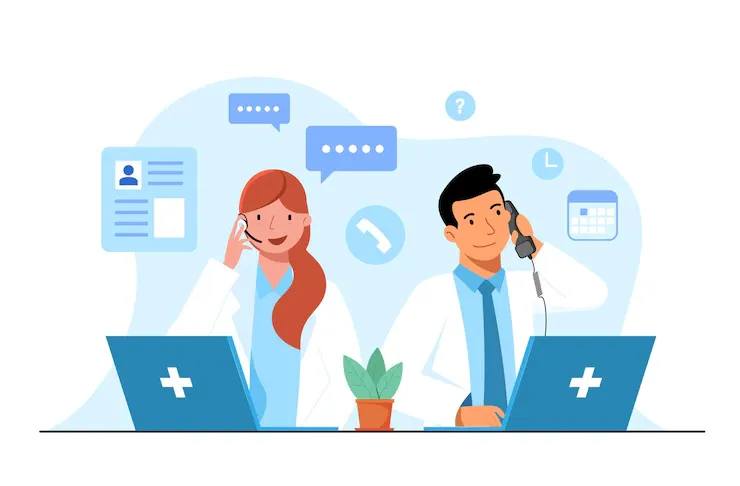
Healthcare call centers are the primary operational infrastructure through which patient communication is delivered at scale. Appointment reminders, post-discharge follow-up calls, care gap closure outreach, prescription adherence check-ins, pre-visit preparation calls, and benefits navigation conversations — all of these are patient communication functions delivered through contact center infrastructure. The quality of that infrastructure determines whether patient communication actually communicates.
This article covers what effective healthcare call center patient communication looks like across the major interaction types — what the evidence shows about outcomes, what operational standards produce those outcomes, and what health systems and provider organizations need to build to close the gap between communication volume and communication effectiveness.
Why Healthcare Patient Communication Fails — The Systemic Problems
Healthcare patient communication fails for predictable, structural reasons — not because of individual agent failures. Understanding the systemic problems clarifies which operational investments have the greatest impact.
| Communication Failure Type | Root Cause | Clinical Consequence |
|---|---|---|
| Message sent but not understood | Medical jargon; health literacy gap; language barrier | Medication errors; missed follow-up; worsening condition |
| Message understood but not acted on | No barrier identification; no navigation support offered | No-shows; prescription abandonment; care gap persistence |
| Patient couldn’t reach the organization | Hold times too long; after-hours coverage absent; language barrier | Urgent concerns unaddressed; ED visits; delayed care |
| Communication delivered too late | Reactive rather than proactive communication model | Condition deterioration before intervention; preventable readmission |
| Inconsistent information across contacts | Agent training gaps; knowledge base not current | Patient confusion; trust erosion; complaint generation |
| Communication in wrong language | English-only outreach to LEP patient population | No-shows; medication errors; access disparity |
The Health Literacy Gap
Approximately 36% of American adults have basic or below-basic health literacy — meaning they struggle to understand routine healthcare communications. For these patients, a discharge instruction sheet, a benefits explanation, or a medication change letter delivered at standard clinical reading level is functionally inaccessible. Call center agents who can translate clinical language into plain, accurate, patient-level explanation are delivering clinical value that written communication alone cannot.
Seven Patient Communication Functions That Drive Measurable Outcomes
1. Appointment Reminders and No-Show Reduction
Appointment reminder calls remain the highest-volume patient communication function in most healthcare contact center operations — and among the highest-ROI. A well-designed reminder program with two touchpoints (48-hour and 2-hour contacts) reduces no-show rates by 40–50% compared to single-touchpoint or no-reminder protocols.
The reminder call is most effective when it goes beyond notification. An agent who confirms the appointment, verifies that the patient can attend, and identifies and removes barriers — transportation, childcare, parking, directions — in the same call converts a passive reminder into an active access management intervention. The patient appointment scheduling guide covers this framework in full operational detail.
2. Post-Discharge Follow-Up Communication
Post-discharge communication is the patient communication function with the highest clinical stakes. The 30 days after a hospital discharge are the highest-risk period for preventable readmission. Most readmissions in this window are not caused by inevitable clinical deterioration — they are caused by communication failures: patients who didn’t understand their discharge medications, who didn’t schedule their follow-up appointment, or who experienced warning symptoms but didn’t know they were significant.
A structured post-discharge call within 24–72 hours — covering medication confirmation, follow-up appointment verification, early warning symptom education, and community resource connection — reduces 30-day readmissions by 15–25% among high-risk patients. This is one of the most evidence-supported patient communication interventions in healthcare, and it requires a trained agent who can have a clinical-context-aware conversation — not read a script.
3. Care Gap Closure Outreach
HEDIS care gap closure depends entirely on outreach quality. A patient who receives a generic reminder that “it may be time for your annual checkup” converts at a fraction of the rate of a patient who receives a specific, personalized call that names the exact measure due, confirms coverage, and offers to schedule in the same contact.
Specificity is the primary variable in the effectiveness of care gap closure outreach. Agents who know which specific care gap they’re addressing for which specific patient — and can reference it directly — produce conversation engagement rates 3–4× higher than agents delivering generic preventive care reminders. The preventive care patient experience guide covers the outreach design principles that produce the highest HEDIS conversion rates.
4. Medication Adherence Communication
Non-adherence to chronic medications costs the US healthcare system over $300 billion annually in preventable hospitalizations, emergency visits, and disease complications. Healthcare call center patient communication that specifically targets medication adherence — identifying patients with low PDC, contacting them to identify adherence barriers, and facilitating solutions — is among the highest-clinical-value outreach programs a health plan or provider organization can run.
Effective medication adherence communication is not a reminder call. It is a conversation about barrier identification and resolution. Patients who aren’t taking their medications are usually not doing so for a specific reason — cost, side effects, dosing complexity, or simple forgetting. An agent who asks “Is there anything getting in the way of taking your medication regularly?” and responds to the answer with genuine problem-solving produces a conversation outcome that a reminder message cannot approach.
5. Pre-Visit Preparation Communication
Pre-visit communication — confirming appointments, explaining what the patient needs to bring, clarifying pre-procedure preparation instructions, and verifying insurance — reduces day-of complications that generate cancellations, delays, and rescheduling burden. A patient who arrives at a colonoscopy without completing the bowel prep because nobody clearly explained the preparation instructions generates a canceled procedure, a wasted appointment slot, and a frustrated patient.
Pre-visit calls that verify completion of preparation, answer preparation questions, and confirm logistics reduce procedure cancellation rates and same-day scheduling complications. They also reduce patient anxiety, which is a legitimate clinical benefit for high-anxiety procedure types, as anxious patients who understand what to expect report significantly better experience scores than those who arrive uncertain.
6. Benefits and Coverage Navigation
Confusion about benefits remains one of the biggest barriers to healthcare access. Patients who don’t understand their coverage simply don’t use it. When a patient hears “your medication requires prior authorization” but receives no explanation of the process, timeline, or appeal options, they often stop pursuing treatment altogether. Similarly, patients who don’t know their preventive screenings are fully covered at no cost never schedule them.
Non-clinical support teams fix this problem. They clearly explain the benefits, walk patients through the next steps, and remove the confusion that keeps people from getting the care they need.
Healthcare call center agents who clearly explain coverage — what’s included, what’s not, what the process is for accessing covered benefits — perform a patient navigation function that directly improves health outcomes. For Medicare Advantage plans, benefits navigation quality directly contributes to CAHPS member experience scores and Stars performance. For health systems, it is a patient satisfaction and access variable.
The Medicare plan guidance covers the specific benefits navigation challenges for Medicare populations — and the agent capabilities required to address them effectively.
7. Behavioral Health Crisis and Sensitive Communication
Not every healthcare call center interaction is a routine administrative exchange. Patients in crisis — reporting suicidal ideation, acute psychiatric distress, or domestic violence situations — may reach healthcare contact centers through multiple channels. Agents who are trained to recognize crisis signals, respond with appropriate calm and support, and route to crisis resources immediately are performing a potentially life-saving function.
Every healthcare call center agent — regardless of their primary function — needs basic training in crisis-signal recognition and in defined escalation protocols. A medication adherence outreach agent who notices a patient expressing hopelessness during an adherence check-in needs to know how to respond to that signal. The training investment is modest. The risk of untrained agents handling these contacts without defined protocols is significant.
Patient communication that actually works requires trained agents, specific content, the ability to remove barriers, and the right timing. Generic outreach produces generic results.
Fusion CX provides healthcare call center patient communication programs — post-discharge follow-up, care gap closure outreach, appointment reminders, medication adherence, and benefits navigation. HIPAA-compliant. Multilingual in 28 languages.
What Healthcare Call Center Agents Need to Communicate Effectively
Patient communication quality is an agent capability problem before it is a process problem. Agents who lack the knowledge, the communication skills, or the authority to actually help a patient produce interactions that check the completion box without delivering the communication outcome.
Plain Language Communication Skills
Healthcare communication research consistently shows that patients retain more information, feel more confident, and take more appropriate action when communication is delivered in plain language — short sentences, common words, concrete examples — rather than clinical terminology. Agents trained in plain language principles produce measurably better patient comprehension outcomes than those who use the vocabulary of clinical documentation.
Plain language training for healthcare call center agents covers: simplifying medical terminology without sacrificing accuracy, using teach-back to confirm understanding, chunking information rather than delivering it all at once, and adapting reading-level calibration to cues in patients’ responses. These are teachable skills. They are not universally present without specific training.
Teach-Back Competency
Teach-back is a validated patient communication technique that confirms comprehension by asking patients to repeat information back in their own words — not by asking “do you understand?” which produces socially compliant yes answers regardless of actual comprehension. Agents who use teach-back on post-discharge calls, medication instructions, and benefit explanations achieve significantly higher retention and action rates than those who simply deliver information and move on.
Teach-back is not intuitive for most agents. It can feel like testing the patient rather than helping them. Specific training — including role-play practice and coaching feedback — is required to make teach-back natural rather than formulaic.
Active Barrier Identification
The difference between a patient communication call that produces action and one that doesn’t is usually whether the agent identified and addressed the specific barrier preventing action. Asking “Is there anything that might get in the way of making it to your appointment?” and then actually addressing the answer — connecting the patient to transportation benefits, finding a closer appointment slot, offering a telehealth alternative — converts communication into outcomes. Delivering information without asking about barriers converts communication into a documented contact that didn’t change behavior.
Escalation Judgment
Every patient communication function occasionally surfaces interactions that exceed the agent’s scope. A post-discharge follow-up call in which the patient reports symptoms suggesting acute deterioration. A benefits navigation call in which the patient reports they’ve stopped taking their medication because they can’t afford to eat. A care gap closure call where the patient’s responses suggest cognitive impairment that a family member needs to be aware of. Agents need defined escalation protocols for these situations — and the judgment to recognize when they apply.
Language Access — Patient Communication That Reaches Everyone
Patient communication that doesn’t reach patients in their preferred language isn’t communication. It’s a documented outreach attempt that produced no clinical outcome. For the estimated 25 million limited-English-proficient adults in the US healthcare system, English-only patient communication programs constitute a systemic failure to serve a significant patient population.
Language Access and Clinical Outcomes
Studies of patient communication in LEP populations consistently show that language-concordant communication — delivered by native-speaking agents in the patient’s preferred language — produces significantly higher appointment completion rates, better medication adherence, lower emergency utilization, and higher patient satisfaction than interpreter-mediated communication. Language access is not a patient experience enhancement. It is a clinical equity requirement with measurable health outcome impact.
Healthcare organizations serving linguistically diverse patient populations need native-speaking patient communication agents — not interpretation services deployed as a fallback. The distinction matters clinically. A post-discharge follow-up call that reaches a Spanish-speaking patient through an interpreter line takes longer, loses conversational nuance, and produces lower comprehension and adherence than a native-language call. For the communication functions with the highest clinical stakes — post-discharge follow-up, medication adherence, crisis recognition — the interpreter line fallback is clinically inadequate.
The full case for multilingual healthcare communication — and what native-language coverage looks like in operational terms — is covered in our dedicated multilingual support resources.
Healthcare Call Center Communication and HCAHPS Performance
HCAHPS — the Hospital Consumer Assessment of Healthcare Providers and Systems survey — directly measures patient experience with communication across multiple domains. These domains connect to patient communication programs in specific, measurable ways.
| HCAHPS Domain | What It Measures | Contact Center Communication Lever |
|---|---|---|
| Communication with nurses | Did nurses explain things clearly? Listen carefully? Treat with respect? | Non-clinical support frees nurse time for patient communication |
| Communication about medicines | Were the medication purposes and side effects explained before administration? | Post-discharge medication follow-up call; adherence outreach |
| Discharge information | Did the patient receive information about recovery? Who to contact for concerns? | Post-discharge follow-up call confirms and reinforces discharge instructions |
| Care transitions | Did staff account for health management after leaving? Were preferences understood? | Post-discharge outreach; follow-up appointment scheduling |
| Responsiveness of staff | Were calls for help answered quickly? Could the patient get bathroom help? | Patient communication routing; non-clinical support freeing clinical response time |
HCAHPS performance affects Hospital Value-Based Purchasing reimbursement. Hospitals that score above the national average on HCAHPS domains receive higher VBP payments. Hospitals that score below receive reduced payments. The patient communication programs delivered through healthcare call centers contribute to several of the most impactful HCAHPS domains — making contact center quality a direct reimbursement variable.
Quality Standards for Healthcare Call Center Patient Communication
Patient communication quality can be measured precisely — but only if the right metrics are tracked. Most healthcare call centers measure operational efficiency (handle time, contacts per hour) rather than communication effectiveness (patient comprehension, action rate, barrier identification rate). The organizations that improve patient communication outcomes measure the right things.
| Communication Quality Metric | What It Measures | Target |
|---|---|---|
| Plain language compliance rate | % of monitored interactions using plain language standards | >90% |
| Teach-back usage rate | % of clinical information exchanges where teach-back is used | >85% on post-discharge and medication calls |
| Barrier identification rate | % of outreach contacts where barrier question is asked and documented | >90% |
| Action conversion rate | % of communication contacts resulting in defined patient action | Varies by program type; tracked vs. baseline |
| Escalation accuracy rate | % of escalation-requiring contacts correctly identified and routed | >99% — clinical safety critical |
| Patient comprehension rate | % of post-discharge patients who correctly repeat key instructions (teach-back) | >80% before call ends |
| 30-day readmission rate (post-discharge program) | % of discharged patients readmitted within 30 days | 15–25% reduction vs. pre-program baseline |
100% AI-assisted interaction monitoring is the quality assurance standard that makes these metrics trackable at scale. Sampling-based monitoring can assess whether teach-back is being used in 5% of calls. AI-powered monitoring scores every call and provides aggregate data on teach-back usage rate, plain language compliance, barrier identification rate, and escalation accuracy — across the entire program, every day. That data drives the continuous improvement that moves patient communication outcomes.
For the complete healthcare contact center quality framework — including 100% monitoring methodology, Stars-aligned scoring, and the connection between quality metrics and clinical outcomes — see the healthcare contact center complete guide.
Ready to build healthcare call center patient communication programs that actually improve clinical outcomes — not just contact volume?
Fusion CX provides HIPAA-compliant patient communication programs for health systems, health plans, pharmacies, and provider organizations — post-discharge follow-up, care gap closure, appointment reminders, medication adherence, benefits navigation, and pre-visit preparation. Plain language trained agents. Multilingual delivery in 28 languages. 100% quality monitoring.