
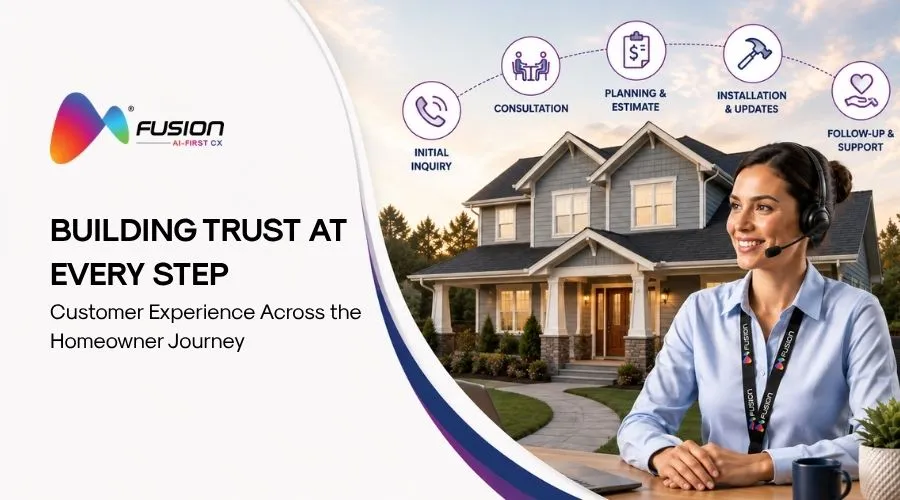
Home improvement customer experience is becoming a meaningful competitive advantage because homeowners are not only choosing materials or installers. They are deciding which company they trust to manage a high-value project inside or around their home.
Whether the project is a new roof, replacement siding, a kitchen remodel, or a bathroom renovation, the purchase is usually considered carefully. It may involve financing, several consultations, scheduling decisions, installation milestones, and follow-up over a period of weeks or months. That changes what great service looks like.
A strong home improvement customer experience is not built around one friendly phone call or one polished consultation. It comes from making every stage of the homeowner journey feel connected, clear, and trustworthy.
For larger home improvement brands, multi-location operators, and growing renovation businesses, that consistency can influence customer confidence, satisfaction, reviews, referrals, and long-term brand reputation.
Why Customer Experience Is Becoming a Home Improvement Differentiator
Homeowners often have more than one credible provider to choose from. Roofing systems, siding options, cabinetry, countertops, warranties, and installation packages may differ, but customers can usually compare several companies offering strong propositions. That means the experience surrounding the purchase matters more.
Three shifts make this especially important.
Product differentiation is getting harder. Homeowners can compare materials, warranties, pricing structures, reviews, and project examples before speaking with anyone. When several providers appear technically capable, customer trust can become the deciding factor.
Financing is part of the experience. Large projects may require customers to evaluate company-approved payment or financing options. Clear financing communication can make the decision feel more manageable, while confusing or inconsistent explanations can quickly weaken confidence.
Research starts long before the first call. Homeowners may review local search results, social proof, referrals, websites, project galleries, promotions, and customer reviews before reaching out. By the time they contact a company, they are often already comparing the experience against competitors.
That is why customer experience in home improvement cannot be treated as a support function that begins after a sale. It starts before the customer ever speaks with the company and continues long after the installation crew leaves.
The Homeowner Journey Is Longer Than the Sale
Most ecommerce purchases follow a relatively short path: discover, buy, receive, and perhaps return. Home improvement is different.
The typical homeowner journey may include research, an initial inquiry, qualification, appointment scheduling, an in-home consultation, estimate review, financing discussions, project scheduling, installation, change communication, final walkthrough, warranty questions, and post-project follow-up. Each stage can involve a different team.
The homeowner, however, does not experience those departments separately. They experience one company. That distinction is important.
If the first-contact team is warm and knowledgeable but the field representative arrives without context, the experience feels disconnected. If the consultation is excellent but project updates disappear after the contract is signed, confidence declines. If the installation goes well but post-completion questions are difficult to resolve, the final impression can still be negative. Strong customer journey consistency means each stage reinforces the confidence created in the stage before it.
First-Contact Trust Sets the Tone
The first live interaction is often the earliest practical test of the brand promise. A homeowner may be calling about a leaking roof, aging siding, a dated kitchen, a bathroom renovation, or another project that feels urgent, expensive, or emotionally important. Good home improvement customer service at this stage means more than answering politely.
The representative should understand the service category, capture the information needed to move the inquiry forward, communicate next steps clearly, and avoid making the customer repeat information unnecessarily later.
Responsiveness also matters. Fusion CX has explored why response time matters in home improvement services, particularly when homeowners are comparing multiple providers and expect quick acknowledgment. For larger operators, the challenge is maintaining that same standard across locations, brands, peak seasons, and extended service hours.
That is where a well-designed home improvement customer experience begins to move beyond individual agent performance and into operating-model design.
Financing and Estimates Are Experience Moments Too
Major home improvement projects often involve significant financial decisions. That makes the financing and estimate stage one of the most important trust moments in the journey.
Customers need clear explanations of company-approved options, scope, pricing components, warranties, timelines, and next steps. They should not receive one message during the initial conversation and a different message during the consultation.
Effective financing support is therefore less about selling a financial product and more about communicating accurately and consistently within the company’s approved process. The same principle applies to estimates.
A homeowner who understands what is included, what happens next, and who to contact with questions is more likely to feel in control of the decision. Confusion, on the other hand, creates doubt.
For home improvement brands, transparent financing communication and estimate clarity are not administrative details. They are part of the customer experience.
The In-Home Consultation Has to Match the Promise
The in-home consultation is often where the customer decides whether the company feels as credible in person as it did during the first interaction. This is where continuity matters most.
If the homeowner has already explained the project, timing, preferences, and concerns, the consultant should receive that context whenever systems and workflows allow it. The customer should not feel as though they are starting over. The consultation should feel like the next chapter of the same conversation, not the beginning of a new one.
That means the field representative should arrive with a clear understanding of why the customer reached out, what has already been discussed, and what expectations were set.
For multi-location organizations, this is also where contractor customer experience becomes especially important. The brand experience must remain consistent even when different local teams, franchise locations, or field representatives are involved.
Trust Can Be Lost After the Contract Is Signed
Many customer-experience strategies focus heavily on winning the sale. But in home improvement, the experience continues long after the customer commits.
Scheduling, material availability, installation timing, project changes, field questions, weather delays, and unexpected issues can all create moments of uncertainty. This is where project communication becomes essential.
Customers should know what happens next, who to contact, when major milestones are expected, and how changes will be communicated. Strong home services customer support can help maintain that visibility across scheduling, installation, escalations, and post-project questions.
Proactive communication can be particularly valuable. Fusion CX has discussed why proactive customer support can strengthen home improvement experiences by reducing uncertainty before customers feel compelled to chase an update. That does not mean over-communicating. It means reaching out when information is useful.
A timely scheduling update, installation reminder, delay notification, or next-step message can preserve trust during a project that may span several weeks.
The Final Walkthrough Is Not the End of the Journey
Project completion is a milestone, but it should not be the last meaningful interaction. The period immediately after installation or final walkthrough creates an opportunity to reinforce the experience.
A thoughtful post-installation follow-up can help confirm satisfaction, answer remaining questions, direct the homeowner to warranty or service resources, and identify unresolved issues before they become negative reviews. This stage also matters because home improvement is highly referral-driven.
Homeowners frequently ask neighbors, friends, and family for recommendations before committing to major projects. A satisfied customer who felt informed and supported throughout the project can become a valuable source of referral generation. That is why referrals should not be treated as a completely separate marketing initiative. In many cases, referral generation is the downstream result of a consistently strong home improvement customer experience.
Four Trust Layers Across the Home Improvement Customer Experience
| Trust Layer | What the Customer Needs | What the Brand Must Deliver |
|---|---|---|
| First contact | Confidence that they reached the right company | Knowledgeable response and clear next steps |
| Financing & estimate | Clarity around a major purchase | Consistent, transparent approved information |
| In-home consultation | Confidence that the real-world experience matches the promise | Prepared representatives and connected customer context |
| Project & post-project care | Visibility, follow-through, and easy access to support | Proactive updates, issue resolution, and completion care |
The important point is that these layers should not operate as four disconnected service functions. The value comes from connecting them.
When the information shared during first contact helps prepare the consultation, when consultation expectations carry into project scheduling, and when project context remains visible during follow-up, the customer experiences one coordinated brand.
What Leadership Should Measure Beyond Close Rate
Close rate is important, but it does not tell leadership whether the homeowner journey is consistently building trust.
Home improvement leaders can also examine customer satisfaction, first-response performance, repeat-contact reasons, appointment-related complaints, consultation feedback, financing and estimate inquiries, project communication issues, escalation trends, post-completion satisfaction, reviews, referrals, and repeat project inquiries. The exact measures will vary by operating model. The objective is to understand where confidence improves and where it breaks.
For example, strong sales performance paired with rising installation complaints may indicate that the pre-sale experience is outperforming the post-sale operation. High customer satisfaction during consultations but weak post-project reviews may point toward gaps later in the journey. Measuring the full experience gives leaders a clearer picture of whether the organization is delivering the same promise across every stage.
Scaling Customer Experience Across Locations Is the Hard Part
Consistency becomes more difficult as a home improvement business grows. Additional locations, brands, territories, field teams, campaigns, and service lines create more opportunities for customers to receive different experiences.
A process that works well in one market may be handled differently in another. One team may follow up proactively while another waits for customers to call. One location may document consultation context carefully while another relies on manual handoffs. That variability becomes a customer-experience problem at scale.
Scaling successfully therefore requires more than additional staffing. It requires standardized workflows, trained resources, clear governance, quality controls, consistent escalation paths, and reliable customer communication.
Fusion CX’s work with a U.S. home renovation leader scaling customer operations nationwide provides a practical example of how structured support can help an expanding organization maintain greater operational consistency across a broader footprint.
For growing home improvement brands, that consistency matters because customers should not receive a dramatically different experience simply because they entered through another market, service line, or location.
Where a Home Improvement CX Partner Adds Value
As customer volume and operational complexity increase, internal teams may find it difficult to maintain consistent coverage across every interaction. A specialized home improvement customer experience partner can support different stages of the journey while operating within the brand’s defined workflows, service standards, and escalation rules.
A well-designed home improvement call center can support first contact, customer inquiries, appointment-related workflows, overflow, extended-hour coverage, project communication, and post-installation follow-up.
For organizations handling substantial inbound demand, inbound call center support can also help maintain responsiveness while preserving the information needed for the next stage of the customer journey. The real value of home improvement call center services, however, is not simply answering more calls. It is the ability to carry the same customer context, service standards, brand tone, and quality expectations across a larger volume of interactions.
When evaluating home improvement call center providers, leadership should therefore look beyond staffing cost. Relevant considerations include training, industry understanding, CRM workflows, QA, escalation management, reporting, scalability, and the provider’s ability to support customer journey consistency.
The same principle applies whether the operating model involves a broader home services call center, support for a multi-location remodeling organization, or a dedicated home renovation call center environment. Businesses deciding whether to outsource a home improvement call center should ultimately evaluate whether the partner can strengthen the experience across the homeowner journey rather than simply absorb interaction volume.
Fusion CX also offers customer service support for organizations that need scalable coverage across voice and digital customer interactions.
Trust Compounds Across the Homeowner Journey
Materials matter. Installation quality matters. Pricing matters. Financing matters. But customers experience all of those things through their interactions with the company.
The most effective home improvement customer experience is not built around one perfect phone call or one polished consultation. It is created when each stage reinforces the confidence established in the one before it.
When first contact, financing, the in-home consultation, project communication, and post-installation follow-up feel like one connected homeowner journey, trust compounds. That trust can influence satisfaction, customer loyalty, reviews, and referral generation long after the project itself is complete.
For home improvement brands competing in markets where customers can choose among several capable providers, that experience may be one of the most durable ways to stand apart. Start a conversation about a Homeowner Journey Experience Review to explore how Fusion CX can support first contact, customer care, project communication, post-installation follow-up, and scalable home improvement CX operations.
Frequently Asked Questions
What is home improvement customer experience?
Home improvement customer experience is the complete experience a homeowner has with a company across research, first contact, consultation, financing or estimate discussions, scheduling, project delivery, support, and post-project follow-up.
Why is customer experience important in home improvement?
Home improvement purchases are often high-value, considered, and spread across several weeks or months. A consistent experience can help build the trust customers need when choosing a provider and can influence satisfaction, reviews, referrals, and repeat opportunities.
Which stages of the homeowner journey have the greatest impact on trust?
First contact, financing and estimate discussions, the in-home consultation, project communication, issue resolution, and post-installation follow-up are all important because each stage can either reinforce or weaken the customer’s confidence in the company.
How can home improvement companies create a more consistent customer journey?
Companies can improve consistency by connecting customer information across teams, standardizing key workflows, setting clear communication expectations, training employees around the same service standards, and maintaining defined escalation and quality processes.
How should home improvement brands measure customer experience?
Alongside sales metrics, leadership can consider customer satisfaction, response performance, repeat-contact reasons, consultation feedback, project communication issues, escalation trends, post-project satisfaction, reviews, referrals, and other measures relevant to the company’s operating model.
Can home improvement customer support be outsourced?
Yes. A specialized external team can support approved customer-service workflows, inbound inquiries, scheduling-related interactions, project communication, overflow, and post-installation follow-up while working within defined brand, quality, training, and escalation standards.