
A buy now pay later model provides an alternative to traditional credit cards by dividing purchase costs into smaller installment payments over set timelines. These financial arrangements function as loans from outside lenders rather than installment agreements directly with merchants. While these solutions offer interest-free periods, they carry financial obligations, potential fees, and distinct risks regarding credit health.
What are Buy Now Pay Later Credit Structures?
A buy now pay later agreement allows a borrower to break down a purchase amount into smaller installments that are repaid over time. Consequently, many buy now, pay later online features operate on a “pay in four” model. Consequently, these models bill equal payment amounts across multi-week intervals.
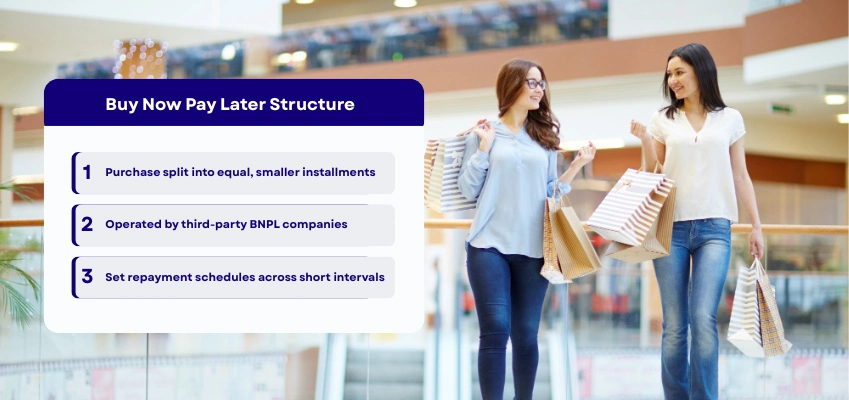
Furthermore, point-of-sale financing originates from outside buy now pay later companies. Therefore, the agreement exists between the buyer and a third-party credit provider instead of the merchant. Although a buy now pay later plan appears simple on the surface, it represents a line of credit within a multi-billion-dollar market.
Assessing Key Consumer Risks in Buy Now Pay Later Solutions
Consumers evaluating buy now pay later options face specific risks identified by consumer protection groups. Because these programs reduce purchase friction, borrowers face a higher risk of overextending their finances.
- Loan Stacking Risks: Easy point-of-sale access enables individuals to take out multiple loans in short timeframes across separate lenders.
- Data Harvesting Practices: Lenders collect data on individual spending and borrowing habits to encourage additional loans.
- Unexpected Fees: Missed terms, convenience fees, and late penalties can catch borrowers off guard.
Consumer Reports data show that having four or more loans simultaneously in default doubles the likelihood of missing a payment. Because terms and dispute channels vary across lenders, managing a buy now pay later (BNPL) plan requires careful tracking.
Fine Print, Terms, and Operational Conditions
A buy now, pay later payment mechanism often offers fewer regulatory protections than standard credit cards or bank loans. Therefore, users must review fine print details to avoid hidden charges.
In addition, buy now, pay later services often require automatic payments from a debit card or bank account. However, paying off installment balances using a credit card increases overall debt risks.
Essential Best Practices for Managing Buy Now Pay Later Options
To maintain financial stability, borrowers using a buy now pay later arrangement should adhere to core risk-mitigation rules.
- Limit Active Loans: Restrict active borrowing to one or two loans at a time to prevent missed payments.
- Review Repayment Terms: Check specific interest rates, late fees, and exact due dates before agreeing.
- Monitor Bank Accounts: Verify funding balances on the initial due date to prevent automatic payment failures.
- Avoid Credit Card Payoffs: Do not settle installment balances by taking on additional credit card debt.
Clear information on payment dates and clear dispute-resolution channels remain critical for properly managing these obligations.
Frequently Asked Questions (FAQ)
What is a buy now pay later loan?
Are buy now pay later programs provided directly by retailers?
What happens if a borrower holds four or more BNPL loans at once?
Do buy now pay later options carry hidden fees?
Why is using a credit card to clear BNPL debts discouraged?
Optimizing Financial Operations and Support Models
As short-term point-of-sale financing grows across retail channels, financial institutions must maintain clear customer service operations and transparent account management. Managing complex loan inquiries, dispute channels, and payment verification requires specialized infrastructure.
Fusion CX delivers tailored customer support for banks and scalable financial outsourcing services. By providing experienced operations, multi-channel dispute assistance, and contact center business process management, Fusion CX helps financial institutions navigate modern credit workflows efficiently. Connect with Fusion CX today to strengthen your operational support models and customer service capabilities.